
Description
The Zetpil™ Suppository Format
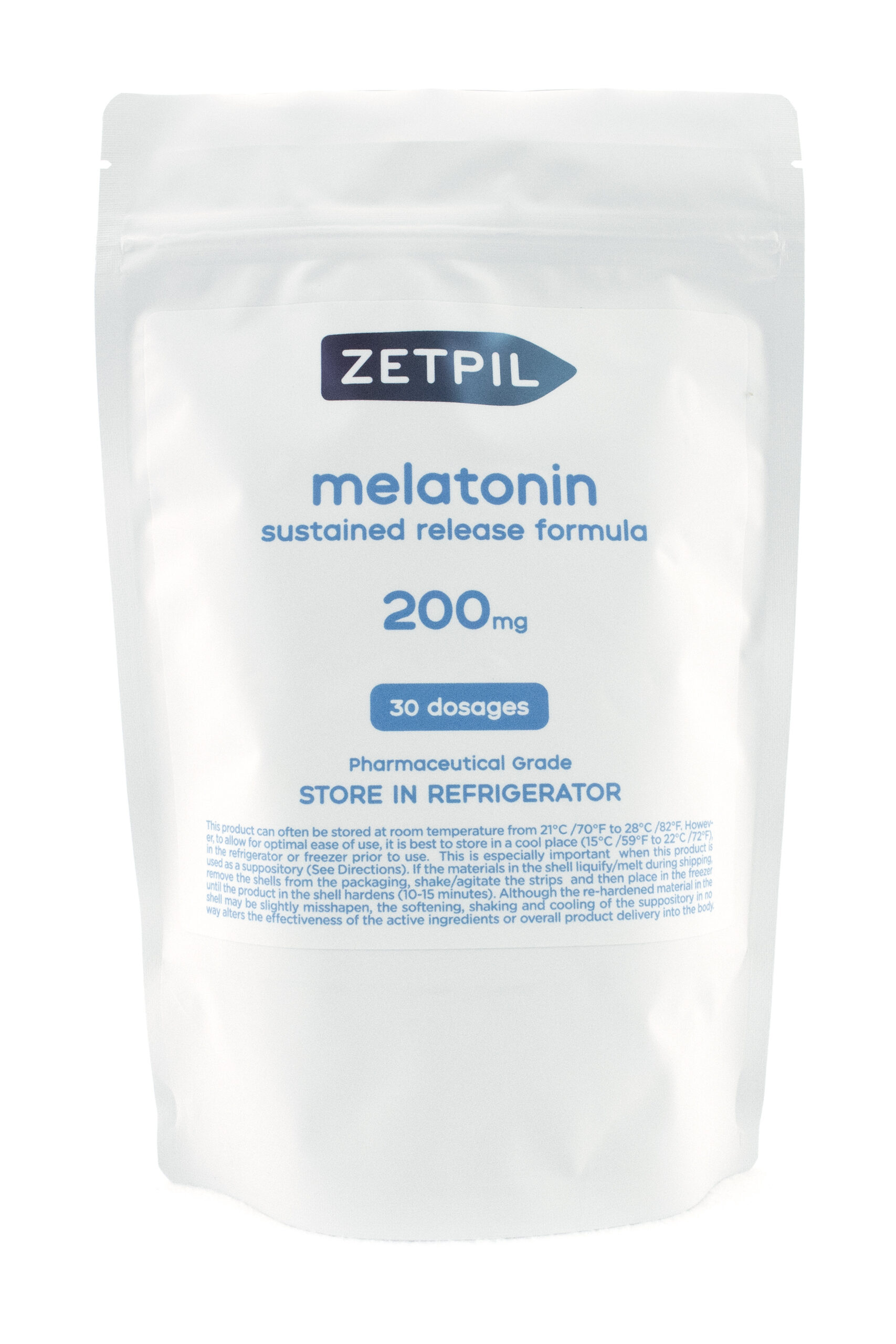
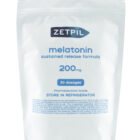
Zetpil™ offers melatonin in a suppository format as an alternative to traditional oral products. Each suppository is formulated with a proprietary base designed to melt after insertion and provide a convenient, non-oral method of administration. The suppository format also avoids the need to swallow tablets, capsules or liquids.
Oral supplements can lose effectiveness as they pass through the digestive system due to stomach acid, digestive enzymes, food interactions, first-pass metabolism, and other factors that affect absorption and bioavailability.
Zetpil™ suppositories are designed for convenient at-home use.
Always use products as directed and consult a qualified healthcare professional if you have questions about whether a product is appropriate for you.
What Is Melatonin?
Melatonin is considered a neurohormone and a neurotransmitter/signaling molecule.
As a neurohormone: The pineal gland releases melatonin into the bloodstream at night. It travels throughout the body and tells the body that it is nighttime, helping regulate sleep and the circadian rhythm.
As a neurotransmitter-like signaling molecule: Melatonin can also act directly on receptors in the brain and other tissues, influencing nerve cells and their activity.
Melatonin is a chemical messenger that can communicate both through the bloodstream and directly with cells in the nervous system. Melatonin is also widely studied for its biological functions.
Supplement Facts
Serving Size: 1 suppository
Servings Per Package: 30
Each Zetpil™ Melatonin 200mg Suppository contains: Melatonin 200mg, taurine, N-acetyl-cysteine (NAC), vitamin D3 and a proprietary combination of plant and fruit butters, medium-chain triglycerides, phospholipids, lecithin, magnesium, arrowroot starch, xanthan gum and guar gum.
Recommended Use
Use one suppository in the early evening, approximately two hours before bedtime, or as directed by your healthcare provider.
Melatonin may cause drowsiness. Individual responses can vary, so the timing of use may need to be adjusted accordingly.
Always use products as directed. However, individual nutritional requirements can vary. Consult your healthcare professional regarding appropriate melatonin intake for your individual needs and whether this product is appropriate for you.
For rectal use, clear the bowels before insertion when possible. The suppository may be moistened with cool water or used with a personal lubricant to facilitate insertion.
Follow the package directions for proper use.
Storage
This product can often be stored at room temperature from 21°C/70°F to 28°C/82°F. However, to allow for optimal ease of use, it is best to store in a cool place (15°C/59°F to 22°C/72°F), in the refrigerator or freezer prior to use. This is especially important when this product is used as a suppository (see directions). If the materials in the shell liquify/melt during shipping, remove the shells from the packaging, shake/agitate the strips and then place in the freezer until the product in the shell hardens (10-15 minutes). Although re-hardened material in the shell may be slightly misshapen, the softening, shaking and cooling of the suppository in no way alters the effectiveness of the active ingredients or overall product delivery into the body.
Warnings
- Keep out of reach of children.
- Do not use if suppositories are opened or damaged.
- Consult your healthcare provider before use if you are pregnant or breastfeeding.
- Consult your healthcare provider before use if you take medications, have a medical condition or have questions about whether this product is appropriate for you.
- This product may cause drowsiness. DO NOT TAKE WITH ALCOHOL or THC.
- Do not use if you have a known hypersensitivity to phospholipids or any of the listed ingredients.
- Discontinue use and contact your healthcare provider if you experience an adverse reaction.
Due to the nature of this product, suppositories cannot be returned or exchanged.
International shipping restrictions apply. Zetpil™ Melatonin is not shipped to European countries (EU and non EU-countries), Australia or Japan.
If you choose to use this product as a rectal suppository, it is highly recommended you attempt to clear your bowels prior to inserting it to avoid premature evacuation. To facilitate insertion it is recommended you moisten the product by passing it under a stream of cool water or use a personal lubricant. When used as a suppository, this product requires 15-20 minutes retention to ensure the complete absorption of the bioactive ingredients. This suppository can be inserted in any position. Although not required, if inserted while lying on one’s side, consider remaining in the supine position for 1-3 minutes following insertion. (Always insert flat end of suppository first).
Individuals that have chosen to take this product as part of a personal nutrient program have overwhelmingly chosen to utilize this product as a rectal suppository. However, this product can also be taken safely by mouth. If one chooses to take this product orally, then this product may be considered a dietary supplement in accordance with current FDA guidelines.
Disclaimer: These statements have not been evaluated by the FDA. This product is a Federal Food, Drug, and Cosmetic Act compliant combination of naturally derived FDA GRAS (Generally regarded As Safe) herbal, nutraceutical, vitamins, minerals and amino acids products legally sold in the USA. In accordance with FDA regulations, when taken orally, this product may be considered a dietary supplement as defined by section 201(ff) of the Act, 21 U.S.C. § 321(ff). Also, this product consists ONLY of a combination of naturally derived FDA GRAS (Generally regarded As Safe) herbal, nutraceutical, vitamins, minerals and amino acids products legally sold in the USA. Therefore, this product cannot be considered a drug as defined in section 201(g)(1) of the Act, 21 U.S.C. § 321(g)(1). This product is not intended to affect the structure or function of the body and is not intended for use in the diagnosis, cure, mitigation, treatment or prevention of disease in man. Any nutritional suggestions and research regarding this product are provided for informational purposes only, and are not intended to diagnose, treat, cure or prevent disease nor should any information provided be used as a substitute for sound medical advice.
References
References
There are more than 10,000 available articles in the National Library of Medicine studying melatonin. We have referenced only some which we feel are valuable. To learn more, please visit: http://www.ncbi.nlm.nih.gov/pmc/?term=melatonin
Melatonin in Alzheimer’s Disease
Li Lin, et al
Int J Mol Sci. 2013 July; 14(7): 14575–14593
http://www.ncbi.nlm.nih.gov/pmc/articles/PMC3742260/
Neurobiology, Pathophysiology, and Treatment of Melatonin Deficiency and Dysfunction
Scientific World Journal 2012; 2012: 640389
Rüdiger Hardeland
http://www.ncbi.nlm.nih.gov/pmc/articles/PMC3354573/
Intracellular redox state as determinant for melatonin antiproliferative vs cytotoxic effects in cancer cells
Sánchez-Sánchez AM, et al
Free Radic Res 2011 Nov; 45(11-12):1333-41
http://www.ncbi.nlm.nih.gov/pubmed/21923620
Melatonin combats molecular terrorism at the mitochondrial level
Russel J. Reiter, et al.
Interdiscip Toxicol 2008 September; 1(2): 137–149
http://www.ncbi.nlm.nih.gov/pmc/articles/PMC2993480/pdf/ITX-1-137.pdf
The Role of Mitochondria in Brain Aging and the Effects of Melatonin
Germaine Escames, et al
Curr Neuropharmacol 2010 September; 8(3): 182–193
http://www.ncbi.nlm.nih.gov/pmc/articles/PMC3001212/pdf/CN-8-182.pdf
One molecule, many derivatives: a never-ending interaction of melatonin with reactive oxygen and nitrogen species?
Tan DX, et al
J Pineal Res 2007 Jan; 42(1):28-42
http://www.ncbi.nlm.nih.gov/pubmed/17198536
Melatonin in bacterial and viral infections with focus on sepsis: a review
Srinivasan V, et al
Recent Pat Endocr Metab Immune Drug Discov 2012 Jan; 6(1):30-9
http://www.ncbi.nlm.nih.gov/pubmed/22264213
Basic mechanisms involved in the anti-cancer effects of melatonin
Mediavilla MD,et al
Curr Med Chem 2010; 17(36):4462-81
http://www.ncbi.nlm.nih.gov/pubmed/21062257
Melatonin: An Established Antioxidant Worthy of Use in Clinical Trials
Ahmet Korkmaz, et al
Mol Med 2009 Jan-Feb; 15(1-2): 43–50
http://www.ncbi.nlm.nih.gov/pmc/articles/PMC2582546/pdf/mol-15-43.pdf
Melatonin Metabolism in the Central Nervous System
Rüdiger Hardeland
Curr Neuropharmacol 2010 September; 8(3): 168–181
http://www.ncbi.nlm.nih.gov/pmc/articles/PMC3001211/pdf/CN-8-168.pdf
Chemical and physical properties and potential mechanisms: melatonin as a broad spectrum antioxidant and free radical scavenger
Tan DX, et al
Curr Top Med Chem 2002 Feb; 2(2):181-97
http://www.ncbi.nlm.nih.gov/pubmed/11899100
Advances in the Research of Melatonin in Autism Spectrum Disorders: Literature Review and New Perspectives
Int J Mol Sci. Oct 2013; 14(10): 20508–20542
Sylvie Tordjman, et al
http://www.ncbi.nlm.nih.gov/pmc/articles/PMC3821628/
Melatonin: An Underappreciated Player in Retinal Physiology and Pathophysiology
Exp Eye Res 2012 October; 103: 82–89
Gianluca Tosini, et al
http://www.ncbi.nlm.nih.gov/pmc/articles/PMC3462291/
Hepatoprotective actions of melatonin: Possible mediation by melatonin receptors
World J Gastroenterol. 2010 December 28; 16(48): 6087–6097
Alexander M Mathes, et al
http://www.ncbi.nlm.nih.gov/pmc/articles/PMC3012585/
Influence of the Circadian System on Disease Severity
Litinski M, Scheer FA, Shea SA
Sleep Med Clin 2009 Jun 1; 4(2):143-163
http://www.ncbi.nlm.nih.gov/pmc/articles/PMC2733366/pdf/nihms-128443.pdf
Abnormal melatonin synthesis in autism spectrum disorders
Melke J, et al
Mol Psychiatry 2008 Jan; 13(1):90-8
http://www.ncbi.nlm.nih.gov/pmc/articles/PMC2199264/pdf/halms166901.pdf
The glutathione system and its regulation by neurohormone melatonin in the central nervous system
Cent Nerv Syst Agents Med Chem 2010 Dec 1; 10(4):287-97
Limón-Pacheco JH, et al